
Spirit Airlines says it will cease operations : NPR
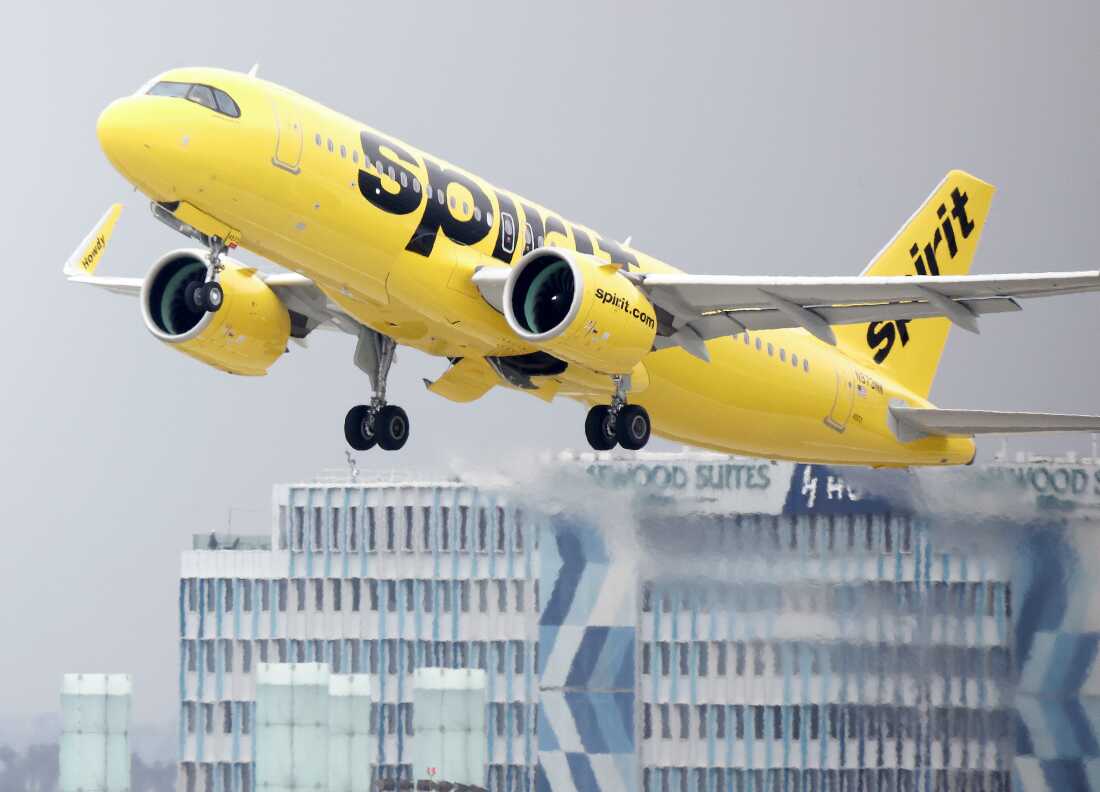
Spirit Airlines has announced it will cease operations. The ultra-low-cost carrier has struggled for years and filed for bankruptcy twice since 2024. Spirit had sought a bailout from the Trump administration.
Mario Tama/Getty Images
hide caption
toggle caption
Mario Tama/Getty Images
WASHINGTON — Low-cost carrier Spirit Airlines, which had been struggling for years, announced it will cease operations.
Spirit had been seeking a $500 million federal bailout from the White House. But those talks failed to yield a deal, leading the airline no choice but to stop flying “effective immediately”.
“It is with great disappointment that on May 2, 2026, Spirit Airlines started an orderly wind-down of our operations, effective immediately,” the airline said in a statement early Saturday. “[A]ll flights have been cancelled, and customer service is no longer available. We are proud of the impact of our ultra-low-cost model on the industry over the last 34 years and had hoped to serve our Guests for many years to come.”
Spirit, based in South Florida, had been under mounting financial pressure due to the war in Iran, which sent the price of jet fuel soaring. But its problems ran deeper than that.
The No. 9 U.S. airline (based on seats) faced increased competition from its larger rivals, which adopted some of the same strategies that had made Spirit successful in the first place.
Spirit was a pioneer among ultra-low-cost carriers, keeping its fares down by stripping away amenities that travelers had previously taken for granted. But bigger legacy airlines countered with their own basic economy fares, making it harder for Spirit to survive.
Spirit tried to sell itself to a larger rival, accepting a $3.8 billion offer from JetBlue after a bidding war in 2023. But the U.S. Justice Department sued to block the deal, arguing that the merger would hurt budget-conscious consumers. A federal judge agreed and rejected the acquisition.

Passengers check in for their Spirit Airlines flights at O’Hare Airport on March 10, 2026 in Chicago, Illinois. The budget airline has announced it will cease operations.
Scott Olson/Getty Images
hide caption
toggle caption
Scott Olson/Getty Images
The airline has filed for bankruptcy twice since 2024, seeking to emerge as a leaner, more competitive operation. But the combination of rising fuel costs and changes in the industry proved too much to overcome.
“When you’re a low-cost carrier, by definition, you’re relying on having a cost advantage. And they just don’t have that anymore,” said Shye Gilad, a former airline pilot and professor at Georgetown University’s McDonough School of Business. “They just don’t have a lot of options left.”

In recent weeks, Spirit had been in talks with the Trump administration on a deal that would have provided a $500 million cash infusion in exchange for a significant potential stake in the company. But there were disagreements inside the administration over the wisdom of funding the bailout.
On Friday, Trump told reporters at the White House that he would like the chance to save the jobs of Spirit’s employees, but Trump said it would have to be “a good deal.”
“If we can help them, we will. But we have to come first. We’re first,” Trump said.

While in bankruptcy, Spirit’s operations had gotten smaller. In February, the airline had a 3.9% market share of U.S. passengers, down from 5.1% in the same month last year, according to data from the aviation analytics company Cirium. Spirit’s market share was poised to fall even further to 1.8% in May, which would have made it the country’s ninth-largest airline.
But even with a small footprint, consumer advocates say Spirit had an important effect on fares by providing competition for the larger legacy carriers on the routes that it flew.
“You do not have to fly a small carrier in order to benefit from its presence, because they will bring down the big guys’ fares,” said William McGee, a senior fellow at the American Economic Liberties Project. Without Spirit flying those routes, he predicted that “everyone will be paying more.”

Source link