
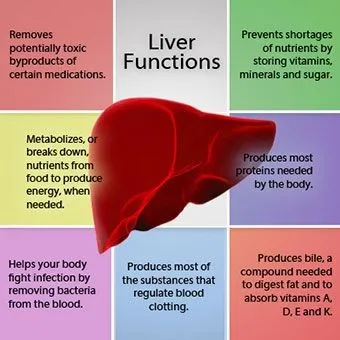
The liver is one of the most important organs in the human body, responsible for a wide range of crucial functions that are essential for our overall health and well-being. One of the liver’s key roles is in the storage of fat, which plays a vital role in energy production and metabolism. In this article, we will explore the liver’s crucial function in storing fat, why it is important, and what you need to know to maintain a healthy liver.
What is the liver and why is it important?
The liver is a large organ located in the upper right side of the abdomen, just below the diaphragm. It is responsible for a wide range of functions, including detoxification, metabolism, and the production of essential proteins and enzymes. The liver also plays a crucial role in the storage of fat, which is important for providing energy to the body when needed.
The liver stores fat in the form of triglycerides, which are a type of lipid that is made up of three fatty acids attached to a glycerol molecule. Triglycerides are the most common form of fat in the body and are used as a source of energy when the body needs it. The liver stores excess fat in the form of triglycerides to be used later when energy demands are high.
Why is fat storage important?
Fat storage is an essential function of the liver because it provides a source of energy for the body when needed. When we eat, our bodies break down the food into its basic components, including carbohydrates, proteins, and fats. These components are then absorbed into the bloodstream and transported to various organs and tissues for use as energy.
When the body has more energy than it needs, the excess is stored as fat in adipose tissue and in the liver. This stored fat can be used later when energy demands are high, such as during periods of fasting or physical activity. Without the ability to store fat, the body would not be able to maintain energy balance and function properly.
The liver’s role in fat storage is also important for regulating blood sugar levels. When blood sugar levels are high, the body releases insulin, a hormone that helps to transport glucose from the bloodstream into cells for energy. Insulin also promotes the storage of excess glucose as glycogen in the liver and muscles. When blood sugar levels are low, the body releases glucagon, a hormone that helps to break down glycogen into glucose for energy.
If the liver is unable to store fat properly, it can lead to a condition known as fatty liver disease, which is characterized by the accumulation of fat in the liver. Fatty liver disease can be caused by a variety of factors, including obesity, high cholesterol, diabetes, and excessive alcohol consumption. If left untreated, fatty liver disease can progress to more serious conditions, such as liver cirrhosis and liver cancer.
How does the liver store fat?
The liver stores fat in the form of triglycerides, which are synthesized from fatty acids and glycerol. Fatty acids are obtained from the diet or from the breakdown of stored fat in adipose tissue. Glycerol is a byproduct of the breakdown of carbohydrates in the liver.
When the body has excess energy, such as after a meal, the liver synthesizes triglycerides from fatty acids and glycerol and stores them in lipid droplets within liver cells called hepatocytes. These lipid droplets can be mobilized and broken down into fatty acids and glycerol when the body needs energy.
The liver also plays a role in the transport of fat throughout the body. Triglycerides are packaged into lipoprotein particles called very low-density lipoproteins (VLDL) in the liver and released into the bloodstream for transport to other tissues for use as energy. In times of fasting or high energy demands, VLDL is broken down into fatty acids and glycerol by enzymes called lipoprotein lipase and released into the bloodstream for energy production.
FAQs:
1. Can the liver store too much fat?
Yes, the liver can store too much fat, leading to a condition known as fatty liver disease. Fatty liver disease can be caused by a variety of factors, including obesity, high cholesterol, diabetes, and excessive alcohol consumption. If left untreated, fatty liver disease can progress to more serious conditions, such as liver cirrhosis and liver cancer.
2. How can I prevent fatty liver disease?
You can prevent fatty liver disease by maintaining a healthy weight, eating a balanced diet low in saturated fats and sugars, exercising regularly, limiting alcohol consumption, and managing any underlying conditions, such as diabetes and high cholesterol. It is also important to avoid fad diets or extreme weight loss measures, as these can lead to metabolic imbalances and liver damage.
3. What are the symptoms of fatty liver disease?
The symptoms of fatty liver disease can vary depending on the severity of the condition. In the early stages, fatty liver disease may not cause any symptoms. As the condition progresses, symptoms may include fatigue, abdominal pain, jaundice (yellowing of the skin and eyes), swelling of the abdomen, and confusion. If you experience any of these symptoms, it is important to see a healthcare provider for evaluation and treatment.
4. How is fatty liver disease diagnosed?
Fatty liver disease is typically diagnosed through a combination of physical examination, blood tests, imaging studies (such as ultrasound or MRI), and liver biopsy. Blood tests can measure levels of liver enzymes and other markers of liver function, while imaging studies can assess the amount of fat in the liver. A liver biopsy involves taking a small sample of liver tissue for analysis under a microscope to confirm the diagnosis.
5. What is the treatment for fatty liver disease?
The treatment for fatty liver disease depends on the underlying cause and severity of the condition. In most cases, lifestyle modifications, such as weight loss, diet changes, exercise, and limiting alcohol consumption, are recommended. In some cases, medications may be prescribed to help reduce fat accumulation in the liver and improve liver function. In severe cases, liver transplantation may be necessary.
In conclusion, the liver plays a crucial role in the storage of fat, which is important for providing energy to the body when needed. Without the ability to store fat, the body would not be able to maintain energy balance and function properly. It is important to maintain a healthy liver by eating a balanced diet, exercising regularly, limiting alcohol consumption, and managing any underlying conditions. If you have any concerns about your liver health, it is important to see a healthcare provider for evaluation and treatment.
